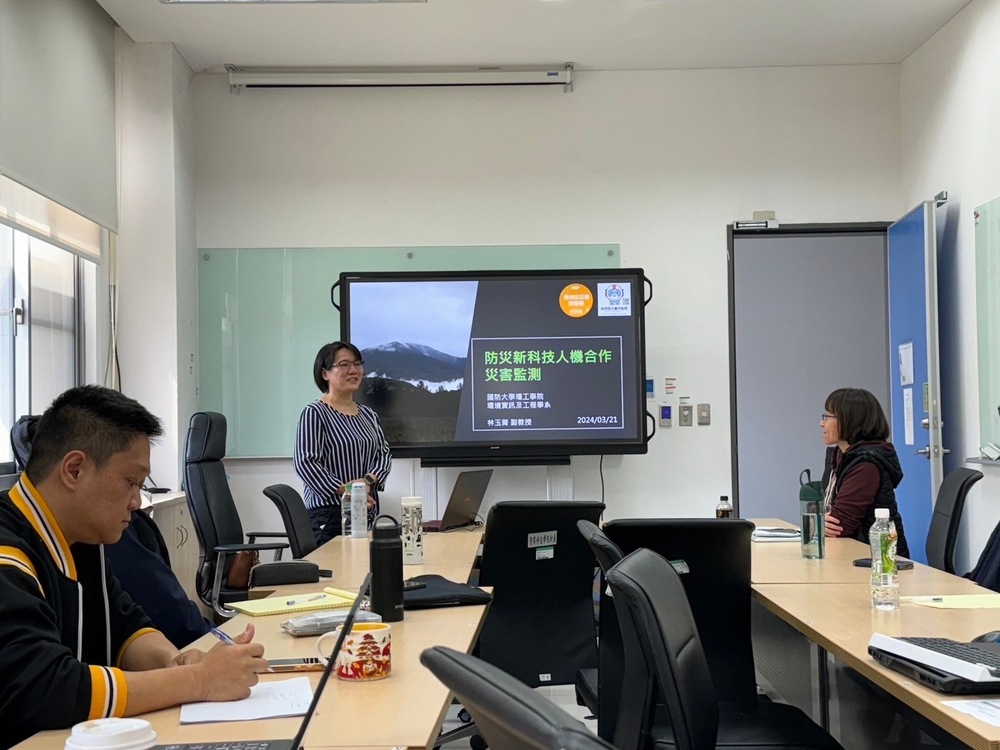
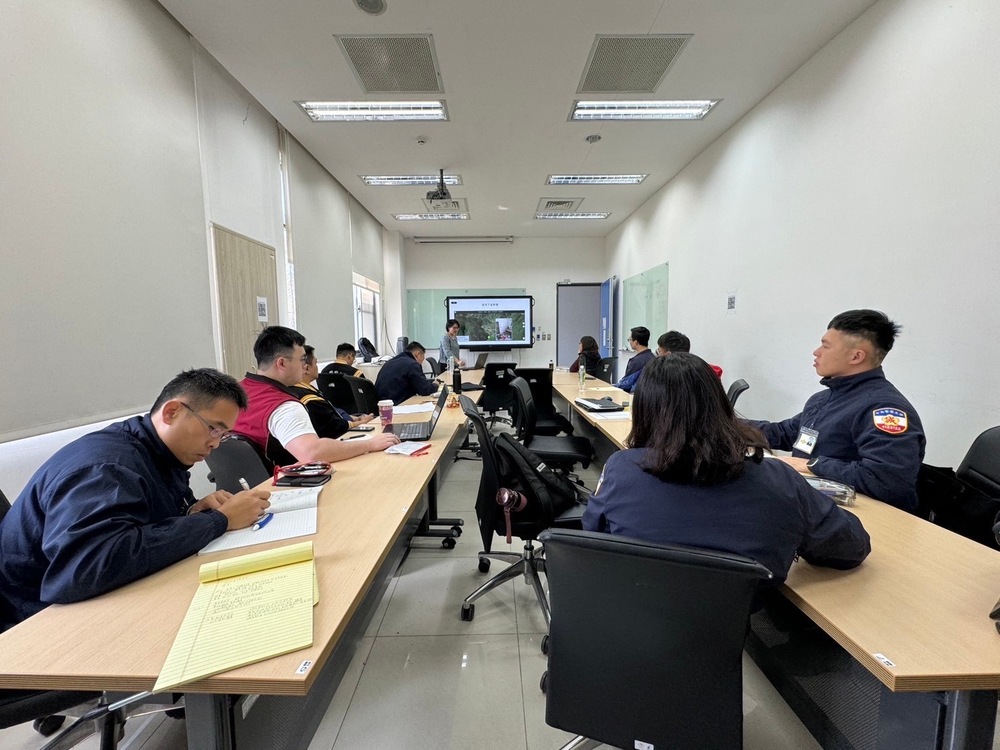
Associate Professor Yu-Ching Lin from National Defense University delivered a keynote lecture.



publish date :
2024-03-22
"On March 21, 2024, we had the pleasure of hosting Associate Professor Yu-Ching Lin from the Department of Environmental Information and Engineering at the College of Science and Engineering, National Defense University for a keynote lecture. Dr. Lin, who holds a Ph.D. in Geotechnical Engineering from Newcastle University in UK, has conducted extensive research in photogrammetry, remote sensing, LiDAR technology, radar imagery, point cloud processing, and the integrated application of spatial information.
In recent years, Professor Lin has combined ethnoscience and spatial science in her research and applied it to the monitoring of disaster warning signs, further extending its application to disaster prevention and monitoring. Her team triumphed in the 'Smart Homeland' digital social innovation competition, winning the first place with their 'Disaster Prevention Online' project, which integrates satellite radar, IoT environmental sensors, and disaster location apps. This integration, along with local residents' knowledge, aims to enhance the effectiveness of disaster prevention.
Professor Lin emphasized the importance of on-site verification and interviewing residents in designing disaster prevention technology products. Thus, she and her team have developed a disaster situation reporting tool that combines the social media bot of Line with the NCDR platform, categorizing and analyzing massive amounts of information and addressing misinformation. Additionally, their automated rainfall and ultrasonic water level monitoring systems can provide timely alerts, a technology that is also diversely applied in reporting potential water accumulated containers to prevent from dengue fever. Disaster prevention and rescue require civic participation; training citizens as scientists can tailor technology-based disaster prevention to meet local needs more effectively."
In recent years, Professor Lin has combined ethnoscience and spatial science in her research and applied it to the monitoring of disaster warning signs, further extending its application to disaster prevention and monitoring. Her team triumphed in the 'Smart Homeland' digital social innovation competition, winning the first place with their 'Disaster Prevention Online' project, which integrates satellite radar, IoT environmental sensors, and disaster location apps. This integration, along with local residents' knowledge, aims to enhance the effectiveness of disaster prevention.
Professor Lin emphasized the importance of on-site verification and interviewing residents in designing disaster prevention technology products. Thus, she and her team have developed a disaster situation reporting tool that combines the social media bot of Line with the NCDR platform, categorizing and analyzing massive amounts of information and addressing misinformation. Additionally, their automated rainfall and ultrasonic water level monitoring systems can provide timely alerts, a technology that is also diversely applied in reporting potential water accumulated containers to prevent from dengue fever. Disaster prevention and rescue require civic participation; training citizens as scientists can tailor technology-based disaster prevention to meet local needs more effectively."